Discover The Enchanting World Of Russian Female Names: Meaning And Origin

Christopher Ramos
Published Mar 19, 2026
Wondering about the beautiful and unique female names from Russia?
Female Russian names are known for their distinctive sound and rich cultural heritage. They often have a melodic quality, with many names ending in the feminine suffix "-a." Some of the most popular female Russian names include Anastasia, Anna, and Maria.
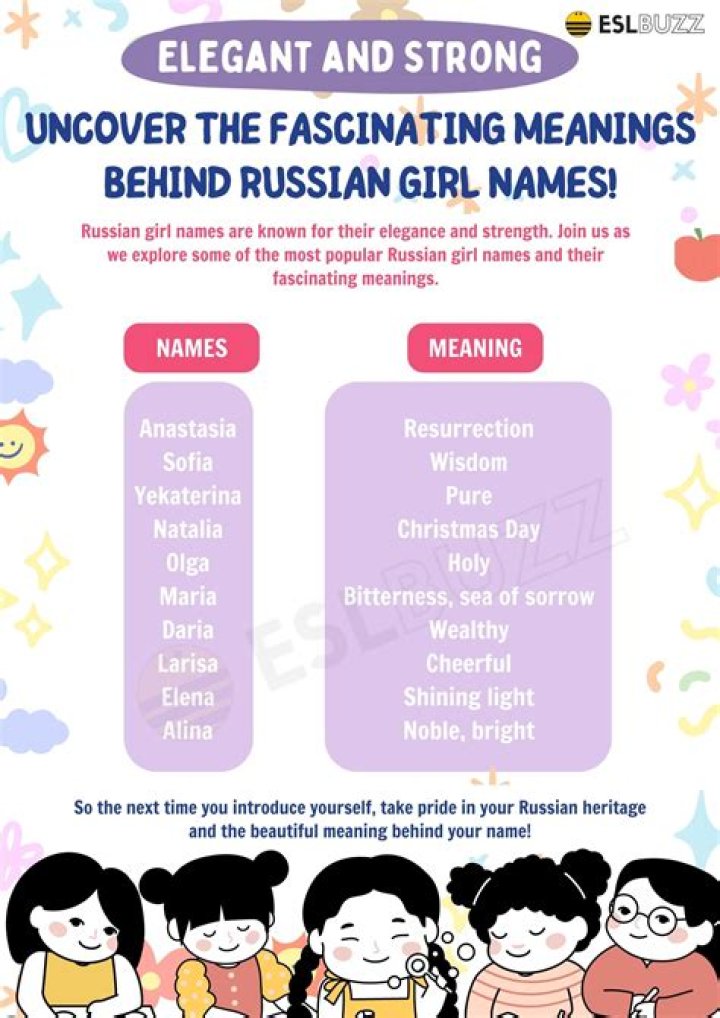
The origins of Russian names can be traced back to various sources, including Slavic mythology, Greek mythology, and Christian traditions. Many names have specific meanings, often related to nature, virtues, or historical figures. For instance, the name "Anastasia" means "resurrection," while "Anna" means "grace." These names hold cultural and historical significance, reflecting the values and beliefs of Russian society.
In contemporary Russia, parents have a wide range of options when choosing a name for their daughter. Traditional Russian names remain popular, but there is also a growing trend towards more modern and international names. Ultimately, the choice of name is a personal one, reflecting the parents' cultural heritage, values, and aspirations for their child.
Female Russian Names
Female Russian names are steeped in history, culture, and linguistic intricacies. Here are seven key aspects that delve into their essence:
- Slavic Origins: Many names trace their roots to Slavic mythology and pagan beliefs.
- Christian Influences: Orthodoxy introduced biblical and Greek names, shaping the naming landscape.
- Meaningful Monikers: Names often carry significant meanings, reflecting virtues, nature, or historical figures.
- Diminutive Endearments: Affectionate nicknames, formed by adding suffixes like "-chka" or "-enka," are common.
- Literary Legacy: Literature, such as Tolstoy's works, has popularized and preserved many traditional names.
- International Adoptions: Some names, like "Anastasia," have gained global recognition and are used beyond Russia.
- Modern Trends: While traditional names remain popular, contemporary parents also embrace international and unique options.
These aspects showcase the diverse tapestry of female Russian names. They are not merely labels but reflections of cultural heritage, linguistic evolution, and personal connections. Whether rooted in ancient folklore or influenced by modern trends, these names continue to embody the spirit and beauty of Russia.
Slavic Origins
The Slavic origins of many female Russian names provide a fascinating glimpse into the rich cultural heritage of the region. Slavic mythology and pagan beliefs held significant influence in pre-Christian Russia, shaping the development of the Russian language and its naming traditions.
Many female Russian names are derived from Slavic deities and mythological figures. For instance, the name "Lada" comes from the goddess of love and beauty, while "Zorya" refers to the goddess of the dawn. Other names, such as "Yaroslava" and "Vseslava," reflect Slavic values of bravery and glory.
The connection between Slavic origins and female Russian names is not merely historical. Many of these names continue to be popular in modern Russia, carrying with them the echoes of ancient beliefs and traditions. Understanding the Slavic origins of these names provides a deeper appreciation for their cultural significance and the enduring legacy of Slavic mythology in Russian society.
Christian Influences
The arrival of Orthodox Christianity in Russia in the 10th century marked a significant turning point in the history of female Russian names. Orthodoxy introduced biblical and Greek names, which gradually gained popularity alongside traditional Slavic names.
- Biblical Names: Many female Russian names have direct biblical origins. Examples include "Maria" (Mary), "Anna" (Hannah), and "Ekaterina" (Catherine). These names hold deep religious significance and reflect the widespread adoption of Christianity in Russia.
- Greek Names: Greek names also became common in Russia through the influence of the Byzantine Empire and the Greek Orthodox Church. Names like "Anastasia" (resurrection), "Helena" (light), and "Sofia" (wisdom) exemplify the strong Greek influence on Russian naming traditions.
- Adaptation and Integration: While biblical and Greek names were introduced, they were often adapted to fit Russian pronunciation and grammar. For instance, "Maria" became "Mariya" and "Anastasia" became "Nastasya."
- Cultural Fusion: The integration of Christian names into Russian culture led to a unique fusion of Slavic and Greek influences. Names like "Svetlana" (light) and "Lyubov" (love) combine Slavic roots with Christian meanings, showcasing the harmonious blend of different cultural elements.
The Christian influences on female Russian names are undeniable. Biblical and Greek names have become an integral part of Russian naming traditions, reflecting the deep religious and cultural ties between Russia and the Orthodox Christian faith.
Meaningful Monikers
Within the realm of female Russian names, the concept of meaningful monikers holds great significance. Russian names often carry deep-rooted meanings, reflecting virtues, natural elements, and historical figures. This practice imbues names with a sense of purpose and symbolism, creating a profound connection between the name and the individual who bears it.
- Nature's Embrace: Russian names often draw inspiration from the natural world. Names like "Svetlana" (light) and "Zarya" (dawn) evoke the beauty and wonder of nature, embodying the qualities they represent.
- Virtue and Character: Many names reflect virtues and desirable traits. "Vera" (faith) and "Lyubov" (love) exemplify this practice, instilling positive values and aspirations in the individuals who carry these names.
- Historical Echoes: Russian history is replete with strong and influential women who have left their mark on society. Names like "Yaroslava" (bright glory) and "Vladlena" (ruler) pay homage to these historical figures, honoring their legacy and inspiring future generations.
- Literary Allusions: Russian literature has also played a significant role in shaping the meanings of female Russian names. Characters from classic works have immortalized names like "Tatiana" (Onegin's beloved) and "Anna" (the tragic heroine of Anna Karenina), imbuing them with literary depth and emotional resonance.
The meaningful monikers of female Russian names are not merely labels but rather reflections of cultural values, aspirations, and historical influences. They create a rich tapestry of names that carry personal significance and connect individuals to their heritage and culture.
Diminutive Endearments
Diminutive endearments are a prevalent feature in the landscape of female Russian names. These affectionate nicknames, often formed by adding suffixes like "-chka" or "-enka," serve various purposes and hold cultural significance within Russian society.
- Expressions of Affection: Diminutive endearments primarily function as expressions of love, tenderness, and familiarity. By using these nicknames, individuals convey their close emotional bond with the person they are addressing.
- Personalization and Uniqueness: Diminutive endearments allow for personalization and the creation of unique nicknames. They enable individuals to distinguish between people with the same name and add a touch of individuality.
- Cultural Identity: The use of diminutive endearments is deeply ingrained in Russian culture. It reflects the warmth, approachability, and collectivist nature of Russian society.
- Gendered Language: Diminutive endearments are predominantly used for female names in Russian. This gendered aspect highlights the distinct roles and expectations associated with women in Russian culture.
In conclusion, diminutive endearments play a significant role in the realm of female Russian names. They serve as expressions of affection, personalization, cultural identity, and gendered language, adding a layer of warmth, familiarity, and individuality to the naming practices of Russian society.
Literary Legacy
Russian literature has served as a powerful force in shaping and preserving female Russian names. Literary giants like Leo Tolstoy, Fyodor Dostoevsky, and Alexander Pushkin have immortalized traditional names through their iconic characters and captivating stories.
Tolstoy's works, in particular, have played a significant role in popularizing and preserving female Russian names. Characters like Natasha Rostova (War and Peace) and Anna Karenina have become synonymous with classic Russian literature and have influenced the naming practices of generations.
The connection between literary legacy and female Russian names goes beyond mere popularity. Literature has also shaped the perception and understanding of these names. Through their characters, authors have imbued names with specific traits, values, and cultural associations.
Understanding this literary legacy is crucial for gaining a deeper appreciation of female Russian names. It provides insights into their historical and cultural significance and helps us trace the evolution of naming traditions in Russia.
International Adoptions
The international adoption of female Russian names is a testament to their enduring appeal and cultural significance. Names like "Anastasia" have transcended national borders, becoming popular in countries worldwide.
- Cultural Exchange: International adoptions facilitate the exchange of cultural practices and traditions. By adopting Russian names, adoptive parents introduce a piece of Russian culture into their families and communities.
- Global Recognition: Certain female Russian names have gained global recognition through literature, film, and other cultural influences. This recognition has made them desirable choices for parents worldwide.
- Historical Connections: Some Russian names, such as "Anastasia," have historical associations that resonate with people beyond Russia. These names evoke a sense of history and cultural heritage.
- Personal Connections: For adoptive parents, choosing a Russian name for their child can be a way to express their personal connection to Russian culture or to honor their child's heritage.
The international adoption of female Russian names highlights their universal appeal and the interconnectedness of cultures in today's globalized world. These names serve as bridges between different cultures, carrying with them the rich heritage of Russia and enriching the lives of individuals worldwide.
Modern Trends
The realm of female Russian names is not static but rather subject to the ebb and flow of societal trends. While traditional names continue to hold their ground, contemporary parents are increasingly embracing international and unique options for their daughters' names.
This trend can be attributed to several factors. Globalization and increased interconnectedness have exposed Russians to a wider range of cultures and naming practices. This exposure has led to a growing appreciation for the beauty and diversity of non-Russian names.
Moreover, modern parents seek to express their individuality and creativity through their children's names. Traditional Russian names, while beautiful and meaningful, can sometimes be perceived as common or overused. By choosing international or unique names, parents can create a distinctive identity for their daughters.
The adoption of international and unique names also reflects the changing values and aspirations of Russian society. As Russia becomes more integrated into the global community, parents are looking for names that will resonate with both Russian and international audiences.
In conclusion, the trend towards international and unique female Russian names is a reflection of the evolving cultural landscape of Russia. It showcases the influence of globalization, the desire for individuality, and the changing values of Russian society.
Female Russian Names FAQs
This section addresses frequently asked questions about female Russian names, providing informative answers to common concerns or misconceptions.
Question 1: What are the most popular female Russian names?
Anastasia, Anna, Maria, Sofia, and Elizaveta are consistently among the most popular female Russian names.
Question 2: Do female Russian names have meanings?
Yes, many female Russian names have specific meanings, often related to nature, virtues, or historical figures. For example, "Anastasia" means "resurrection" and "Svetlana" means "light."
Question 3: Are female Russian names difficult to pronounce?
Pronunciation of female Russian names can vary depending on the name and the speaker's accent. However, with practice, most names can be pronounced accurately.
Question 4: Can female Russian names be used outside of Russia?
Yes, female Russian names are used worldwide and have gained popularity in recent years. Names like "Anastasia" and "Natalia" are recognized and used in many countries.
Question 5: How do I choose a female Russian name for my daughter?
Consider the meaning, sound, and popularity of the name. Research different names and their origins to find one that resonates with you and your family.
Question 6: Are there any cultural considerations when choosing a female Russian name?
Yes, some female Russian names may have cultural or religious significance. It is important to be respectful of these traditions when selecting a name.
In summary, female Russian names offer a rich tapestry of meaningful, beautiful, and culturally significant options. By understanding the nuances of these names, you can make an informed choice that honors both tradition and personal preference.
Transition to the next article section:
Conclusion
Female Russian names are a vibrant and diverse reflection of the country's rich history, culture, and linguistic heritage. From traditional Slavic monikers to meaningful Christian influences, these names carry a depth of meaning and symbolism.
The exploration of female Russian names not only provides insights into Russian culture but also underscores the importance of preserving and celebrating diverse naming traditions. As the world becomes increasingly interconnected, the exchange of cultural practices, including the adoption of unique and beautiful names, enriches our collective heritage.